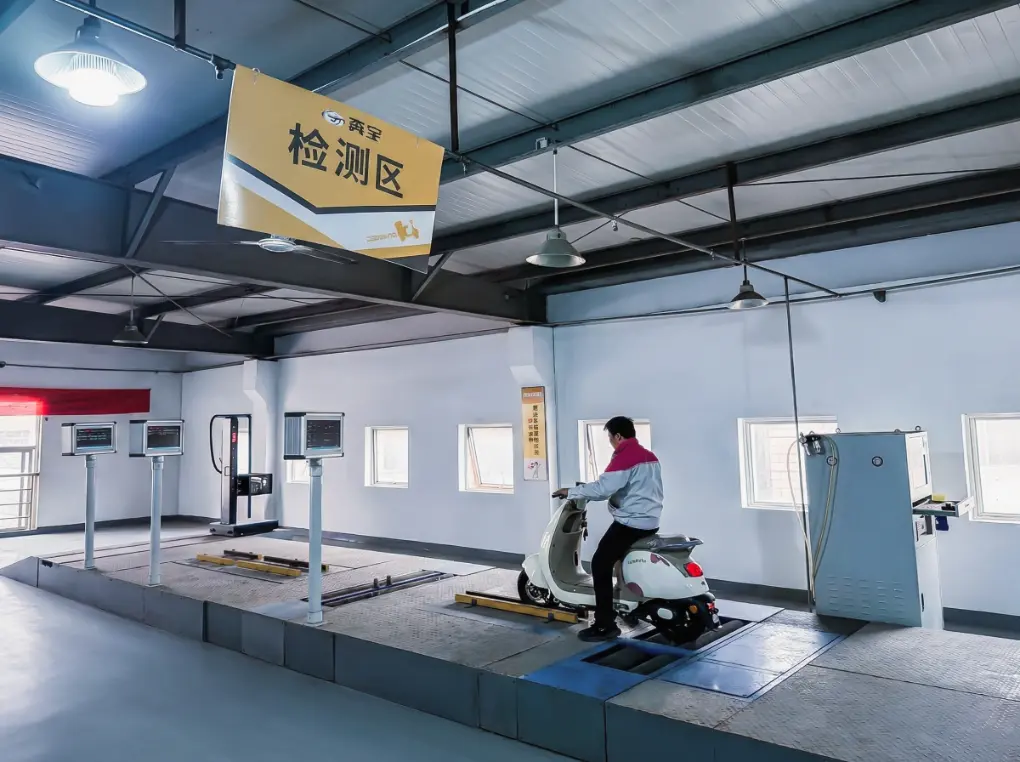
Before charging an electric scooter lithium battery in winter, check that it meets the manufacturer's charging conditions. Plan journeys with a range reserve and follow the battery model's instructions for storage. Riding a certain distance or feeling warmth on the casing does not establish whether the battery is ready to charge.
This guide helps dealers explain winter battery care to customers and supports purchasing teams planning to operate vehicles in cold climates. It applies to lithium battery configurations; lead-acid batteries require their own maintenance instructions. Follow the vehicle, battery pack and compatible charger manuals for specific procedures.
Low temperatures can affect available energy, power output and charging. Performance varies with battery chemistry, control systems and operating conditions.
1. Check the battery's permitted charging conditions
Before charging, check the battery and charger models. Confirm that the battery is within the manufacturer's permitted charging temperature range and that connectors are dry, undamaged and free of warning indications. Warmer surroundings do not mean the battery's internal temperature has reached the permitted range. If you cannot tell, follow the model's instructions or contact after-sales support.
After cold storage, allow the battery to return naturally to the permitted charging temperature range in an environment suitable for that model. Do not heat it with a flame, heat gun, hot water or by placing it close to a heater. Do not remove a fixed battery yourself to warm it; handle a removable battery only as instructed in its manual.
The effects of low-temperature charging depend on cell chemistry, actual temperature and charging current. Charging difficulties and changes in range can have several causes. Weather or riding habits alone cannot diagnose a fault; persistent problems need an after-sales assessment.
2. Check after riding before deciding when to charge
Riding can change battery temperature, but the change depends on starting temperature, load, speed, battery construction and journey length. A completed ride does not prove that the battery's internal conditions are suitable for charging. Charging immediately after every ride is not a universal winter rule.
If sustained high-load riding has made the battery too hot, follow the manual and wait until the battery is within the permitted charging temperature range. If there are signs of overheating, damage or a warning indication, stop using it and contact after-sales support. Do not repeatedly reconnect the charger or bypass protection to force charging.
3. Use a compatible charger and a suitable charging location
Use the supplied charger or one the manufacturer has explicitly confirmed is compatible. Matching connectors or similar voltage labels do not make chargers interchangeable: battery type, output specifications and control systems must also match.
Charge only while someone is awake and able to notice a problem. Do not leave the battery charging while you are asleep or away. Disconnect the power after charging as instructed in the manual. Choose a dry, suitably ventilated location away from combustible materials. Keep escape routes clear and do not cover the battery or charger.
4. Plan journeys around actual winter range
Available range can fall in winter. The extent depends on temperature, battery condition, speed, load, tyre pressure, gradients and stop-start riding. Allow a reserve when planning vehicle operations or daily journeys. Do not plan a trip that uses the full summer range or exhausts the battery based on a single test result.
When first using the scooter in cold conditions, observe charge level and power delivery on a short route from which you can return safely. Gradually build a record of that model's local performance. Heed low-charge warnings and recharge as instructed. Do not repeatedly try to continue riding after a protective shutdown.
When comparing winter range results, check the model, battery configuration, ambient temperature, load, speed, route, starting charge and test method. A fixed percentage loss without test conditions cannot predict your scooter's local range.
5. Follow model-specific instructions for long-term storage
Before an extended period without use, check the battery pack's storage temperature, recommended charge level and inspection requirements. Do not leave a depleted battery unused for a long period or assume that keeping the charger connected is an appropriate storage method. Follow the model's instructions for when and how to recharge during storage.
Store the battery in a dry location, protected from moisture, crushing, direct sunlight and unsuitable temperatures. Follow the vehicle manual on whether to remove the battery, disconnect it from the vehicle or check its remaining charge. Before returning it to use, inspect its appearance, connections and warning indications.
6. Stop charging and using the battery if warning signs appear
If you notice swelling, leakage, visible damage, an unusual smell or abnormal heat, stop charging and using the battery and contact your dealer or professional after-sales service. Disconnect power only if it is safe to do so. Do not open the pack, press on swollen areas, repair cells yourself or bypass protective circuits.
If the battery is smoking, burning or making alarming unusual noises, move away, alert others and contact the local fire or emergency service. Do not approach it to move the battery, retrieve the scooter or take photographs. Do not put a damaged battery in ordinary household waste or arrange to send it as a standard parcel yourself.
What dealers should explain at handover
Provide instructions that match the vehicle and battery configuration. Identify the charger model, permitted charging conditions, low-temperature and low-charge warnings, storage requirements and after-sales contact details. Training materials should distinguish between battery options rather than applying one unlabeled parameter sheet to every vehicle.
For general support information, see the after-sales FAQ. Model-specific operating instructions still apply.
Frequently asked questions
Can I charge after riding 10 km?
Distance alone cannot tell you. Check that the actual battery condition meets the manufacturer's charging requirements.
Does shorter winter range mean the battery is damaged?
Not necessarily. Compare operating conditions and check for warning indications. If the problem persists or there is abnormal heat or damage, stop using the battery and have it checked.
Does a BMS make charging safe at any low temperature?
Do not assume so. The battery management system's functions, protection thresholds and recovery conditions must be confirmed for the specific battery pack.
Discuss your cold-weather operating requirements
Tell the BENBAO team about the winter conditions in your target market, preferred models, battery configuration, parking arrangements and daily routes. These details help the technical team assess suitable options and the instructions needed. Suitability must be checked for each configuration and operating environment.
Further battery safety information
General guidance is available from the UK Department for Transport, the US CPSC on charger compatibility and the London Fire Brigade on battery warning signs. These sources provide general safety advice, not BENBAO product specifications or certifications. Follow the documentation for your model and local requirements for damaged-battery handling.